
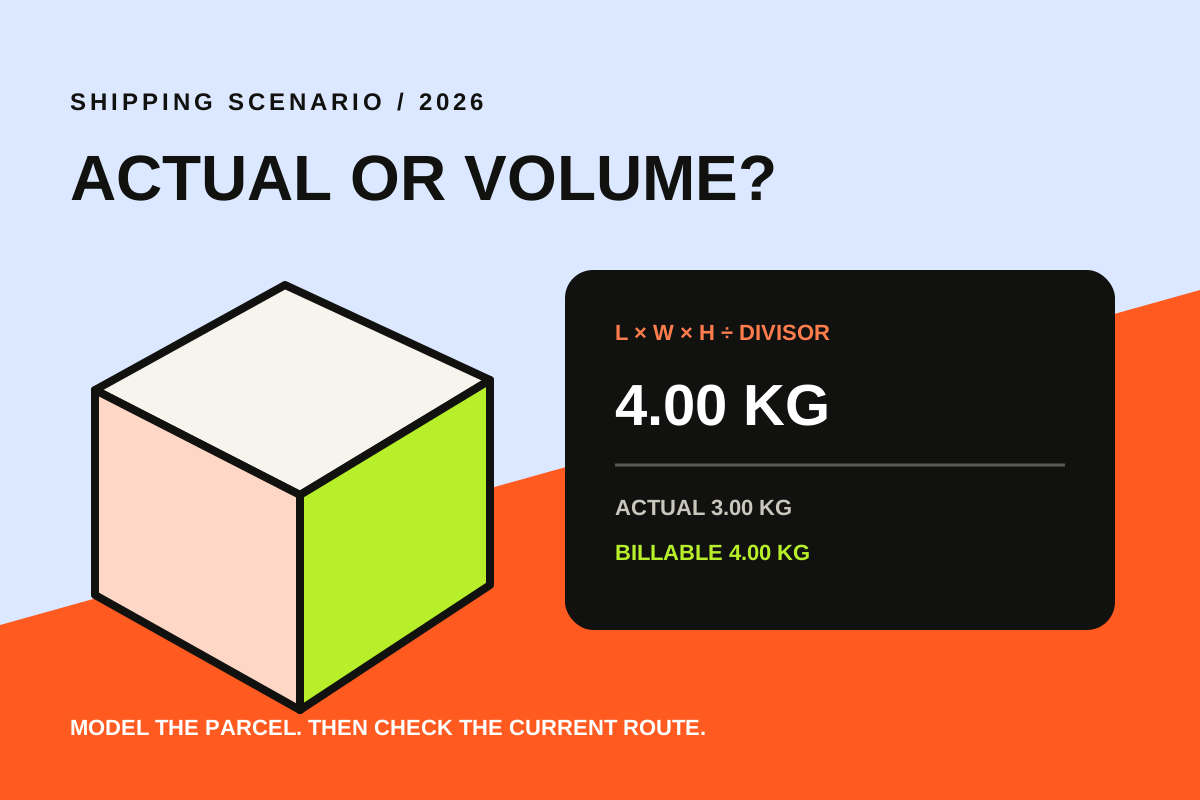
A useful Sugargoo shipping calculator does not guess one magic price. It separates the variables that create the quote: destination, actual weight, package dimensions, product restrictions, route billing rules and optional services. The goal is to compare realistic scenarios before the warehouse packs the parcel, then replace assumptions with measured data before payment.
Sugargoo’s official shipping guidance describes a freight-estimation tool that asks for destination and parcel information, and its package-simulation guidance explains why measured weight and dimensions matter. That distinction is essential. An early estimate supports budgeting; a packed parcel provides the evidence used for the final route calculation. Use the calculator below to understand the math, not to replace current route terms inside your account.
Billable weight and shipping scenario calculator
Enter one packed-parcel scenario. Use the volumetric divisor and rate shown by the route you are evaluating. Leave the rate at zero if you only want to compare weight.
Start with the correct type of estimate
Before purchase, you may know only an item’s advertised weight or a rough community estimate. This is a product-level planning figure. After warehouse arrival, individual item weights are more useful, but they still exclude the final carton and some protective material. After consolidation or package simulation, the parcel has measurable dimensions and a more reliable scale weight. Label every number by stage so an early estimate is not mistaken for a final quote.
Build a low, expected and high scenario. The low scenario can assume redundant retail packaging is removed. The expected scenario should include ordinary packing. The high scenario should allow for retained boxes, reinforcement or a route with less favorable billing. If the purchase works only in the low case, the product budget is too aggressive.
Actual weight versus volumetric weight
Actual weight is what the packed parcel weighs on a scale. Volumetric weight converts the space occupied by the parcel into a weight equivalent. A common form is length multiplied by width multiplied by height, divided by a route-specific divisor. The dimensions must use the unit required by the formula. The divisor is not universal; use the current line’s rule rather than copying a number from an unrelated carrier.
A parcel containing dense hardware may be governed by actual weight. A parcel of shoes in boxes, padded jackets or rigid packaging may be light on the scale but large in the aircraft or truck, making the volumetric figure more important. The route may apply the greater figure, a threshold rule or another charging method. Read the specific billing note rather than assuming every displayed line behaves identically.
Why calculator results and final quotes differ
The first cause is input quality. A product listing may omit packaging, use a seller estimate or describe one unit while the order contains several. The second is packing: carton weight, corner protection, waterproofing, shoe trees and retained boxes change mass or dimensions. The third is route eligibility. Once the actual product type and parcel size are known, the cheapest preliminary line may no longer be available.
The fourth cause is billing increments. A route may round weight or charge an initial amount plus continuation units rather than multiplying a simple per-kilogram rate. Remote-area, fuel, tax or other route-specific charges may also apply. The tool on this page intentionally models a simple base fee plus rate so you can compare parcel shapes; the current checkout remains the source for the complete price.
Use package simulation when uncertainty is expensive
Sugargoo’s public guidance describes pre-shipment package simulation as a way to obtain more accurate packing data before choosing a route. It is most useful when several boxes create uncertain volume, the parcel is near a size or weight limit, or two routes use different billing approaches. The value is better evidence, not an automatic discount.
Give clear packaging instructions before simulation. Identify which retail boxes may be removed, which items need protection and whether fragile goods should remain separated. Otherwise the measured scenario may not match the parcel you actually want. When the result arrives, record packed dimensions, scale weight, included items and services so route comparisons use the same parcel.
Run changes one variable at a time
Begin with the expected parcel. Then test a smaller height to represent vacuum packing for suitable soft goods, or smaller dimensions to represent box removal. Keep weight, divisor and rate constant while changing dimensions. This shows whether the proposed packing service actually crosses a billable-weight boundary. Next test a different divisor or rate to represent another eligible route, keeping the parcel unchanged.
Do not compare a carefully compressed parcel on one route with an unpacked guess on another. That mixes packaging and route effects. A fair table contains the same inventory and clearly states the packing assumption. Add separate columns for actual weight, dimensions, volumetric weight, billable basis, route estimate, protection and delivery range.
Calculate landed cost, not freight alone
International freight is one part of the order. A landed-cost ledger can include product price, China-side delivery, optional inspection or handling, packing services, international freight, payment conversion differences and destination taxes or carrier charges. Some elements will remain unknown until later, so mark them as estimates and keep a reserve rather than hiding them.
Allocate freight to products carefully. Dividing total shipping by item count makes a bulky low-value item look cheaper than it is. For a buying decision, allocate some cost by weight or volume. The purpose is not perfect accounting; it is recognizing when one shoe box, coat or rigid accessory changes the parcel enough to make the item poor value.
When removing packaging saves money
Removing a box helps only if it reduces the charged figure or unlocks a better route. A smaller parcel that remains in the same billing increment may produce little immediate saving. It can still improve handling, but that is a different benefit. Use the calculator with measured or plausible before-and-after dimensions to see whether the volumetric result crosses a meaningful threshold.
Protection has value. Retail boxes can prevent crushing, and fragile items may need reinforcement even when it increases volume. If packaging is removed, consider whether internal stuffing, edge protection or a stronger outer carton is needed. Once packaging is discarded it may not be recoverable, so the decision should balance freight, damage risk and presentation.
Split parcel or consolidate?
Consolidation can reduce duplicated base charges and unused packaging. Splitting can separate restricted or fragile goods, comply with a size limit or allow ready items to move while one order is delayed. Neither is always cheaper. Model both structures using the same route assumptions and include a base charge for each parcel.
A split is strongest when it solves a defined problem: route compatibility, maximum dimensions, protection conflict or timing. It is weak when based only on someone else’s haul. Compare total billable weight, duplicate fees, services and risk. The calculator can model each parcel separately; add the results and compare them with the consolidated scenario.
A final pre-payment checklist
Confirm the destination, recipient data, parcel inventory, measured weight, dimensions, packaging instructions and product classification. Read the current route’s calculation method, limits, delivery estimate, tracking scope and protection terms. Check whether the displayed amount is an estimate, deposit or final charge and whether an adjustment process applies. Save the summary you approved.
Keep a buffer for measurement differences and route changes. If the current options exceed the budget, return to controllable variables: remove nonessential items, change appropriate packaging, split only when it creates a route advantage, or wait for a suitable option. Do not solve a budget problem by misdescribing the parcel or ignoring restrictions.
What the number can and cannot tell you
A calculator can reveal the relationship between dimensions, divisor, actual weight and price. It can show why a light box is expensive and whether a packaging change might matter. It cannot guarantee that a route accepts the goods, reproduce every charging increment, predict customs action or promise a delivery day. Those facts come from current route terms and the actual parcel.
The best estimate is a documented range that becomes narrower as better data arrives. Start with a product budget, update it with warehouse weights, use measured packing when volume matters, and make the final comparison from eligible live routes. That process is more reliable than any single community price per kilogram.
Keep a reusable estimate record
Save each calculation with a date, destination, inventory list, weight source, dimensions, divisor, rate and packaging assumption. When the measured quote arrives, record the difference and its cause. Over several parcels, this becomes a personal forecasting model for the product types and destination you actually use. It is far more relevant than an anonymous screenshot with no carton dimensions.
Do not overwrite the early scenario. Keeping both versions reveals whether the main error came from product weight, parcel volume, route availability or an omitted fee. Use that lesson to improve the next budget. The purpose of a shipping calculator is not to be perfectly right before evidence exists; it is to make uncertainty visible, comparable and progressively smaller.
Frequently asked questions
How does the Sugargoo shipping calculator work?
A freight estimator uses the destination, parcel weight, dimensions, item type and currently available route rules to produce indicative options. The final packed parcel can change the result.
What is billable weight?
Billable weight is the charging basis used by a route. Depending on its terms, a carrier may compare actual scale weight with volumetric weight and charge the applicable higher or rounded figure.
Why is final Sugargoo shipping higher than the estimate?
The early estimate may use incomplete item data, while the final quote uses packed dimensions, packaging services, route eligibility and the carrier’s billing increments.
What volumetric divisor should I use?
Use the divisor stated for the specific current route. Carriers and lines can use different divisors, so a generic calculation is only a scenario until matched with the route terms.
Does removing boxes always reduce shipping cost?
No. It helps only when the smaller parcel changes billable weight or route eligibility. Protection and damage risk should remain part of the decision.
Is the calculator result a guaranteed quote?
No. It is a planning scenario. Use current Sugargoo route results and the measured packed parcel before payment.